Intellectual property & technology
Copyleft and open source licenses
A reading of copyright, open source licenses, the concept of copyleft, and the balance between protecting the owner and user rights.
 Huda Tulti
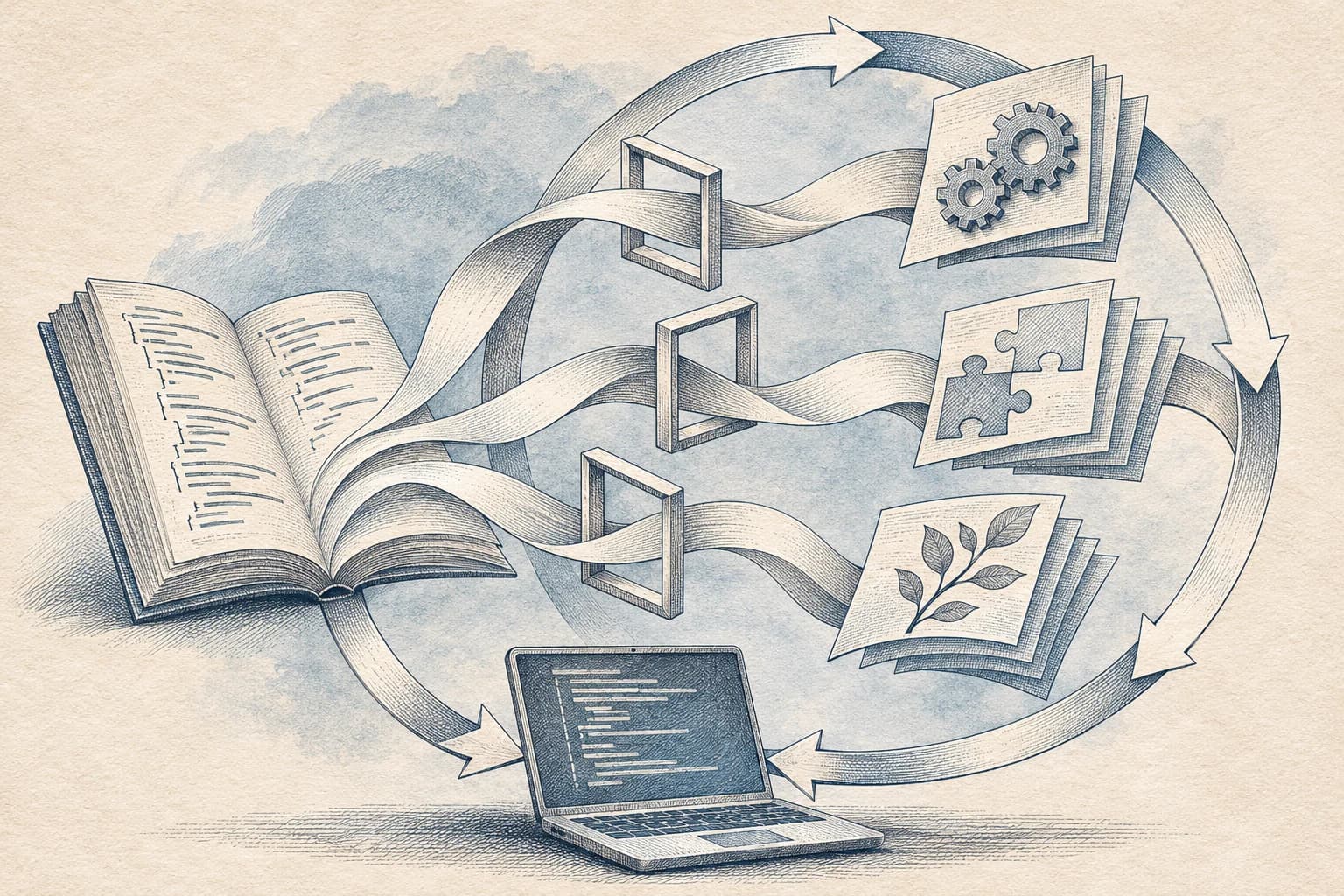
Licensing and copyright contracts
The relationship between licensing contracts and copyright laws is an important topic worthy of study, as licensing contracts are designed to expand the scope of protection for products such as computer programs beyond that granted by copyright laws.
Copyright laws aim to balance the interests of the general public with those of the copyright owner. However, many copyright owners want to strengthen these rights and have turned to licensing contracts as a possible mechanism for this in the information age.
Companies that sell products primarily in the digital technology space are particularly interested in protecting their rights against an infringing user, because of the ease with which digital products can be infringed.
In response to the ease of copying software, software manufacturers and the electronic publishing industry have turned to licensing contracts in their various forms, to enhance the protection provided by the copyright structure.
Many buyers when installing software on their systems are surprised to discover what they were contracted to do. Many shrink-wrap licenses, for example, claim that the product was rented and not purchased, making its resale a violation of copyright laws.
Licensing contracts are a way to expand property rights in the information age, and while licenses are needed to govern or control some aspects of copyrighted material, licenses were developed to protect digital content very broadly.
Example from the judiciary
Perhaps the clearest example is Mortenson v. M.A. Mortenson Co. Timberline Software Corp.([1]). As a new operating system was invented that old programs could not run on, Mortensen's company purchased the updated version of the program and contracted with Timberline to install the program on its devices.
Mortensen's company used the program after it was installed to submit a presentation about a project to establish a medical center. During the preparation of the presentation, the program crashed several times, then it continued to work, and the presentation was prepared and Mortensen won the contract as the lowest bidder. Mortensen then discovered that the program had somehow resulted in a miscalculation, resulting in the bid being about $2 million lower than it should have been.
Officials at Mortensen Company decided to file a lawsuit against Timberline to cover their losses resulting from the program error. It became clear to Mortensen that at the time of purchasing the new program, Timberline was aware of the existence of a problem in the program, and had a remedy for it at that time, but it saw that this problem would not cause significant harm to its customers and decided not to inform them of it or the method of treating it unless asked to do so.
The parties disputed the truth surrounding who opened the cover of the program when it arrived at Mortensen's offices. Mortensen claimed that she was not aware of the terms of the license contract on the packaging, which stipulate that Timberline is not liable for damages resulting from defects in the software, because the software was installed by Timberline itself.
The Washington Supreme Court ruled in favor of Timberline and ruled that it was not necessary to read the contract to be bound by it. The court completely ignored Timberline's knowledge of the software's design flaws, which could have been remedied by providing updates to Mortensen to operate the software properly. This case illustrates the tendency of courts in the United States to consider licensing contracts binding even when they contain unfair terms.
Open source and copyleft
In light of such rulings that show a bias towards the software industry at the expense of users, the need has emerged to find some kind of balance between the two parties.
In fact, there remains a good alternative to licensing contracts that can provide balanced protection for both the user and copyright owners. This alternative is open source software and its corresponding licenses that make open source software possible, in the sense of agreeing to grant licenses associated with the open source movement.
Open source licenses are based on copyright law, but while licensing contracts attempt to close out all uses not licensed by the author, open source uses copyright law to encourage the exchange of information in order to facilitate the development of better software. The availability of open source constitutes an alternative to obtaining licenses, takes into account the balance between audience and producer, and provides the opportunity to reconsider copyright law and its relationship to licensing.
The licenses that protect open source software are called general public licenses (GPL). The basic idea behind these licenses is that all source computer code protected under these licenses is designed to be available to all users. Source codes mean the sum of data and instructions written in a programming language, which enable the program, when run, to achieve the expected results.([1])
Some source codes are copyright-related and not available to the public, while others, which are open source codes, are available to the public of users, interested people, and programmers. Thus, they can use these codes and make modifications to them, improve them, update them, or fragment them, to comply with their specifications, provided that all these modifications and improvements are available to all users. This special part of the GPL ensures that users cannot privatize parts of the code created by programmers under the GPL and then force others to pay them to use that code.
If someone does not want to exchange code, they will have to create their own software, in which case they will not need to use GPL licenses.
These licenses were designed to eliminate companies' ability to own publicly available code, so the GPL cleverly used the power of copyright laws - which allow the author to control the use and distribution of a product - to make software available for free. Thus, a concept different from the conventional concept of copyright emerged, known as (Copyleft), which means: (copyleft or without copyright). One of the definitions of (copyright or non-copyright) states: “It constitutes a public means by which programs or other works are made free, with the condition that modified or added copies must be free. The simplest means of making them free is to make them available to the public without copyright protection.”([1]).
Here it must be made clear that free does not mean that individuals give up their programs, as the program is not given for free, but is sold for money. Freeware is the symbols or code in which the program was written.
Open source principles
The principles on which open source technology is based can be summarized as follows:
- The foundation of any open source system is that the source code is available to anyone.
- If you use code protected under an open source license, the code must be shared with the user community.
- Business money does not come from the code, but from the product of the software, and the support that is provided for it.
- The new concepts of open source mean that piracy is no longer considered a problem, and the need for licensing contracts becomes obsolete.
The idea of open source encourages relying on what already exists, even if it was created by someone else. There is no meaning in rewriting the code to perform the same function in a different program. The logical thing is to use the same code in the new program. While copyright laws prohibit the open source approach of considering code as proprietary,([2]) takes the copyrights left behind as the basis for its grants. This is by obligating the software developer whose development was based on an open source license to provide the developed software under the same type of license so that the latter also becomes available to the public as it is owned by the public.
While the idea of copyleft rights opens wide scope to the user and licenses him to use the program code licensed through open source and rely on it to develop the program on the condition that the developed program is provided as open source, licensing contracts are based on the opposite, which is monopoly. In other words, the former represents the user population while the latter protects the rights of software owners. Which leads us to wonder which party will prevail?
References
([1]) See: An article entitled (What do we mean by copyleft?) available at: http://www.gnu.org/copyleft/cooyleft.ar.html. (4/30/2008).
([2]) See: Deborah, Halbert, article entitled (Open Source as an Alternative to Cover Licenses and Copyright) at: http://www.murdoch.edu.au/elaw/issues/v10n4/halbert104_text.html. (2/23/2008).
([1]) See: Definition of source code in the free encyclopedia at: http://www.wikipedia.org (3/15/2008).
([1]) See: Washington Supreme Court ruling available at: http://www.murdoch.edu.au/elaw/issues/v10n4/halbert104_text.html (2/23/2008)
Also the same ruling on the website: http://www.infoworld.com/articles/uc/xml/00/08/21/000821ucshrink.html. (1/29/2008).
Article contributors
- Huda Tulti
What does this mean for your business?
Discuss the issue with our team and understand the advice relevant to your matter.
Discuss this topic